Veterinary rapid tests play an essential role in animal health diagnostics, providing veterinarians with quick, reliable results for detecting diseases in pets, livestock, and wildlife. These tests are designed to offer rapid turnaround times, allowing for timely treatment and control of infectious diseases. By leveraging immunoassay technologies, veterinary rapid tests have become crucial for disease management, biosecurity, and public health protection.
Importance of Veterinary Rapid Tests
- Speed and Convenience: Veterinary rapid tests, such as those for Canine Parvovirus (CPV) and Feline Leukemia Virus (FeLV), deliver results within minutes, enabling faster decision-making. These tests are invaluable in situations where time is critical, such as emergency diagnostics in clinics and field settings [NIH, CDC].
- Accuracy and Reliability: These tests use advanced technologies like lateral flow immunoassays to ensure high specificity and sensitivity. Institutions like NCBI and NIAID have extensively researched their reliability in detecting antigens associated with various pathogens, ensuring accurate results.
- Cost-Effectiveness: Veterinary rapid tests provide a more affordable alternative to laboratory-based diagnostic methods, making them accessible to small clinics, shelters, and animal breeders. They are an effective solution for widespread testing without the need for expensive equipment, as recommended by The National Institutes of Health (NIH).
Common Veterinary Rapid Tests
- Canine Parvovirus (CPV) Test: CPV is a highly contagious virus in dogs, particularly affecting puppies. Early detection through rapid testing is critical in preventing outbreaks and reducing mortality. Cornell University’s College of Veterinary Medicine has highlighted the importance of early CPV detection in reducing the spread of this disease.
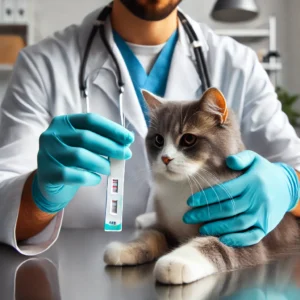
- Feline Leukemia Virus (FeLV) Test: FeLV is a leading cause of death in cats. Rapid FeLV tests allow for quick diagnosis, helping control the spread of the virus among feline populations. The American Association of Feline Practitioners recommends routine screening for FeLV using rapid tests.
- Brucella Canine Test: Brucellosis, a bacterial infection that can spread to humans, is detected through Brucella rapid tests. Testing is essential for breeders to prevent the disease from spreading among dogs. The USDA outlines control measures, including the use of rapid testing to monitor and manage Brucella in breeding facilities.
- Avian Influenza Virus (AIV) Test: With the potential to spread quickly through bird populations and affect human health, rapid tests for Avian Influenza are critical for poultry farmers. The Centers for Disease Control and Prevention (CDC) provide extensive guidelines on controlling avian influenza outbreaks, emphasizing the role of early detection through rapid testing.
How Veterinary Rapid Tests Work
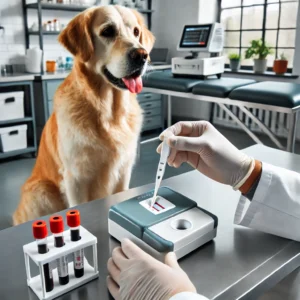
Veterinary rapid tests are typically based on immunochromatographic assays, also known as lateral flow tests. These tests work by detecting specific antigens or antibodies in a sample, such as blood, serum, or swabs.
- Sample Collection: A small sample, usually blood or a swab from the animal, is taken. For detailed sampling techniques, NIH and NCBI provide comprehensive guidelines on best practices in sample handling.
- Test Application: The sample is applied to the test cassette, which contains antibodies specific to the target antigen. If the target antigen is present, it binds to these antibodies, causing a visible line to appear. For more on how this technology works, consult NCBI.
- Results Interpretation: Within minutes, the test produces a result that can be interpreted visually. Institutions like The USDA’s Animal and Plant Health Inspection Service (APHIS) and CDC outline protocols for interpreting rapid test results, ensuring accuracy in diagnosis.
Applications in Disease Control and Biosecurity
Veterinary rapid tests have far-reaching applications in disease control, particularly in managing outbreaks among animals. For example, rapid tests for diseases like Peste des Petits Ruminants (PPR) and Foot-and-Mouth Disease (FMD) are critical for farmers managing large herds. The World Organization for Animal Health (OIE) emphasizes the role of early detection through rapid testing in preventing and controlling these highly contagious diseases.
In zoonotic disease management, rapid tests are crucial for identifying diseases like Leptospirosis and Rabies, which can spread from animals to humans. The CDC provides resources on the importance of rapid testing in zoonotic disease surveillance, helping to protect public health by controlling animal-borne disease outbreaks.
Future of Veterinary Rapid Tests
The future of veterinary rapid testing lies in the development of multiplex assays, which allow for the detection of multiple pathogens simultaneously. This advancement would streamline diagnostics and reduce costs, making it easier to control diseases in large animal populations. Additionally, NIH and NIAID are funding research into molecular diagnostics, such as PCR-based rapid tests, which could offer even greater sensitivity and accuracy.
Conclusion
Veterinary rapid tests are indispensable tools in modern animal health diagnostics. Their ability to provide quick, accurate, and cost-effective results makes them invaluable for veterinarians, breeders, and farmers. From detecting Canine Parvovirus to controlling Avian Influenza, these tests play a vital role in ensuring animal and public health.
